 Service Hotline:+86 178 1676 8780
 E-Mail:sales1@cnrrsteel.com
 CN
CN



Location: Home - News - Industry news
When sourcing high-purity stainless steel valves, unions, and fittings for pharmaceutical, food & beverage, or data center liquid cooling systems, selecting the correct standard is critical. A minor mismatch in threads, lengths, or seal profiles can lead to fluid leakage, project delays, and unexpected financial losses.
As a direct manufacturer of sanitary fluid handling components, we frequently assist global clients in navigating international piping standards. Here are the 3 most common selection traps in international procurement and how to avoid them.
One of the most frequent errors in purchasing sanitary unions (male, liner, and nut) occurs when ordering "DIN fittings" without clarifying the exact dimensions.
DIN 11850 (Metric Series): Designed according to European metric standards, where pipe outer diameters (OD) align with standard metric wall thicknesses (e.g., DN25 = 29mm OD, DN40 = 41mm OD).
DIN-Inch / Imperial Series: Uses imperial/inch-based outer diameters while retaining DIN-style thread patterns or nut dimensions.
The Risk: A DIN 11850 liner will not match a DIN-Inch pipe. Always verify the exact outer pipe diameter (OD) and wall thickness on technical drawings rather than relying solely on nominal descriptions.
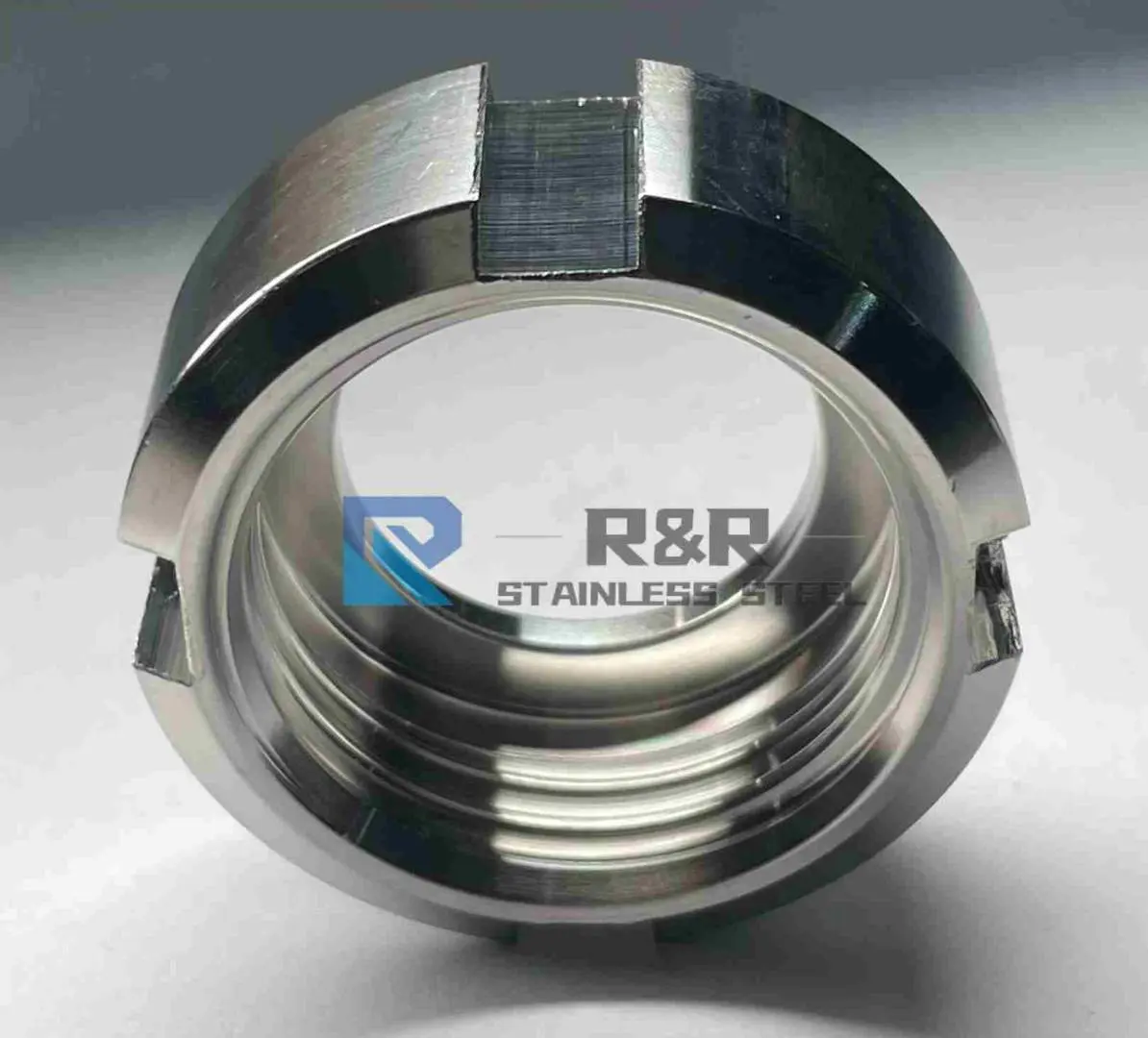
SMS (Swedish Milk Standard) and DIN unions look visually similar, but their structural parameters differ significantly:
Nut Profiles & Threads: SMS nuts feature different round thread pitches and groove cuts compared to DIN nuts.
Gasket Seats: The rubber/elastomer seal (EPDM, FKM, Silicone, PTFE) must match the precise seat groove geometry. Using an SMS gasket in a DIN male fitting will cause pinching and pressure leakage.
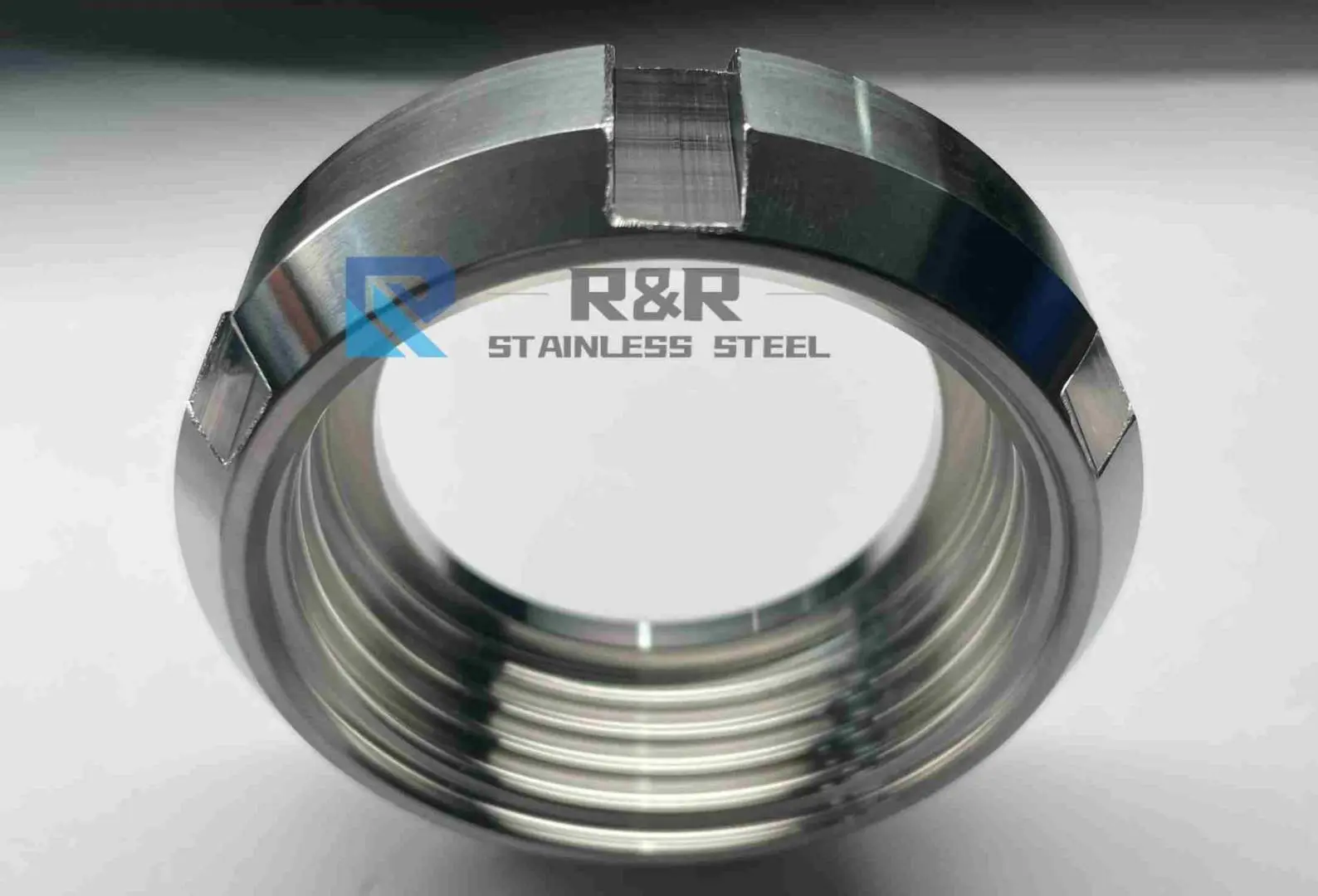
In high-purity sanitary and pharmaceutical applications, raw material verification is non-negotiable.
Material Traceability: Ensure that every nut, male, and liner is clearly laser-etched with the material grade (AISI 304 or AISI 316L) and heat number (TY batch code).
Documentation: Always request a Mill Test Certificate (MTC EN 10204 3.1) alongside pre-shipment inspection photos to verify material chemistry (e.g., Fe < 1% for high-purity specs).
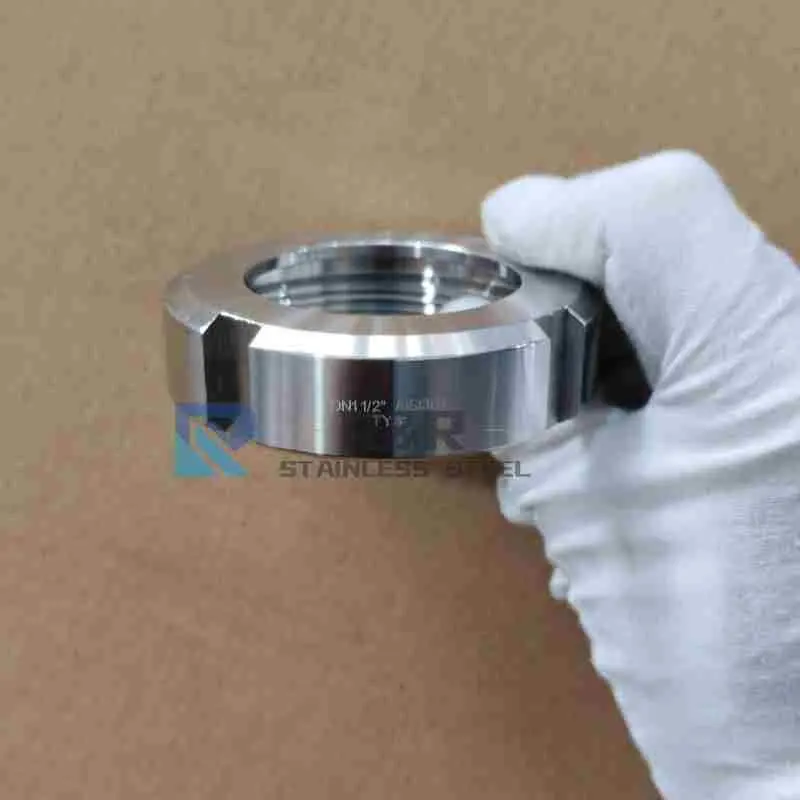
At our 25,000 m² manufacturing facility equipped with over 120 CNC lathes, every production batch undergoes strict dimensional and surface roughness (Ra ≤ 0.8 µm) inspection. We provide complimentary 2D/3D drawing confirmations before mass production to eliminate compatibility risks.
Need technical drawing verification or a competitive quote for your upcoming piping project?
Contact our engineering team today or submit your RFQ directly through our website!